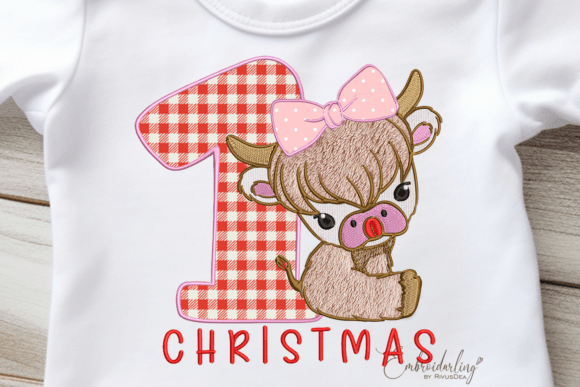
Reviewing My 1st Christmas Embroidery Applique for Business
As an embroidery designer who has spent years digitizing logos and testing files for commercial production, I approach every new machine embroidery design with a critical eye. It is not just about whether a pattern looks cute on a screen; it is about how it performs under the needle, how it wears after washing, and how it elevates a brand’s perceived value. Recently, I evaluated My 1st Christmas Embroidery Applique, a digital asset marketed toward baby onesies, t-shirts, and nursery gifts. While the primary category is listed as Boys and the type is standard Embroidery, my focus was strictly on its viability for small business merchandise and branded applications.
First Impressions: Visual Personality and Professional Appeal
The first thing I look for in a digital embroidery file is clarity of intent. Does it feel handmade? Is it bold enough to be seen from a distance? My 1st Christmas Embroidery Applique presents a playful yet classic aesthetic. The use of appliqué techniques typically reduces bulk and adds a layered, premium texture that customers associate with high-quality handmade product lines. For a small business owner, this visual personality is crucial. It signals care and craftsmanship rather than mass-produced indifference.
However, because this design is themed around a specific holiday and age milestone, its versatility depends heavily on execution. In a professional context, I see this not just as a baby item, but as a potential seasonal accent for boutique branding. If you run a creative studio or a local bakery, using this design on limited-edition holiday merchandise can create a sense of community and warmth. The design feels friendly and decorative, avoiding the overly complex details that often cause thread breaks or registration issues in fast-paced production environments.
Real-World Applications for Small Business Merch
When integrating My 1st Christmas Embroidery Applique into your product line, consider where it adds the most value. Here is how I would deploy this design across various small business merch categories:
- Custom Apparel and Uniforms: For staff at a boutique or café, placing this design on the sleeve or chest pocket of a uniform shirt can add a festive touch without overwhelming the brand logo. It works well as a secondary accent to your primary brand identity.
- Embroidered Patches: This is perhaps the strongest use case. By stitching the design onto twill or felt and cutting it out, you create a durable embroided patch. These can be ironed or sewn onto denim jackets, tote bags, or even pet bandanas for pet brands looking to capitalize on the holiday season.
- Tote Bag Design: A canvas tote featuring this appliqué becomes an instant gift-with-purchase item. The texture of the appliqué contrasts beautifully with the flat weave of canvas, making the tote bag design stand out in retail displays.
- Apron Embroidery: For florists, bakers, or craft instructors, an apron with this seasonal motif serves as both uniform and marketing tool. It humanizes the staff and creates photo-worthy moments for social media engagement.
It is important to note that while the product description mentions suitability for wall art and home decor, from a commercial standpoint, soft goods offer higher turnover and repeat customer potential. Focus on items that people wear or carry to maximize brand visibility.
Technical Considerations and Production Challenges
Before running a full batch of commercial embroidery, you must address technical constraints. Appliqué designs rely on precise placement of fabric pieces. If you are using this on curved surfaces like caps, you need to be cautious. Cap embroidery requires specialized stabilizers and often smaller hoop sizes. Ensure that the scale of My 1st Christmas Embroidery Applique fits within the tight curvature of a cap front without distorting the text or shapes.
Another critical factor is stitch density. While appliqué generally uses less thread than fill-stitch designs, the tack-down stitches and satin borders must be dense enough to secure the fabric but not so dense that they perforate delicate materials. If you are applying this to thin t-shirts or baby onesies, use a cut-away stabilizer to prevent puckering. For heavier fabrics like denim or canvas tote bags, a tear-away stabilizer may suffice, but always test first.
Pay close attention to thread colors. The contrast between the appliqué fabric and the border stitch defines the design. If your brand colors are muted, ensure the border thread provides enough definition. Also, consider the fabric texture. Highly textured fabrics like fleece or terry cloth can hide fine details. Since this design is likely intended for smooth cottons or blends, avoid using it on rough textiles unless you increase the stitch width of the border.
Enhancing Brand Identity and Customer Trust
Consistency is key to building brand identity. Using a cohesive set of design assets helps customers recognize your products instantly. My 1st Christmas Embroidery Applique can be part of a seasonal collection that reinforces your shop’s aesthetic. When customers see high-quality stitching and well-executed appliqué, their trust in your brand increases. They perceive the finished product as valuable, which justifies higher price points.
For Etsy sellers and handmade brands, presenting this design effectively is vital. Create a printable mockup or high-resolution photos showing the texture and depth of the embroidery. Show the design on different items—a onesie, a tote, a patch—to demonstrate versatility. This visual consistency across your marketing materials enhances buyer engagement and reduces hesitation at checkout.
Practical Designer Notes for Implementation
To ensure success with My 1st Christmas Embroidery Applique, follow these practical steps before committing to large-scale production:
- Test in Black and White: Before selecting final thread colors, stitch out the design in black and white. This helps you evaluate the contrast and readability of the shapes without the distraction of color.
- Check Scale for Patches: If creating patches, verify that the design remains clear at smaller sizes. Tiny lettering or intricate details may merge together if scaled down too far.
- Confirm Hoop Size: The product description states it comes with multiple embroidery file formats, but it does not specify exact dimensions. Always check the hoop size requirements against your machine’s capabilities. Ensure the design fits comfortably within your hoop with adequate margin for stabilization.
- Review Commercial Licensing: Never assume a digital file includes commercial rights. Read the license terms carefully. If you plan to sell items featuring this design, confirm that the creator allows for commercial use of the digital embroidery file.
- Create Client Mockups: If you are doing custom work for clients, generate a digital mockup showing the design on their specific garment. This manages expectations and ensures approval before stitching begins.
In conclusion, My 1st Christmas Embroidery Applique offers significant potential for small businesses looking to add seasonal flair to their merchandise. Whether used for custom apparel, branded patches, or holiday gifts, its success lies in thoughtful application and rigorous technical testing. By treating this design as a strategic business asset rather than just a decorative element, you can enhance your product offerings and strengthen your brand’s market presence.